Welcome to the Tribe: Why Employee Welcome Kits Are the New Culture Code
A welcome kit is the first place a new hire can check whether your culture is real. What makes a kit feel human, how it changes onboarding, and how to run kits as a programme rather than a one-off.
- Published:
- 2 November 2025
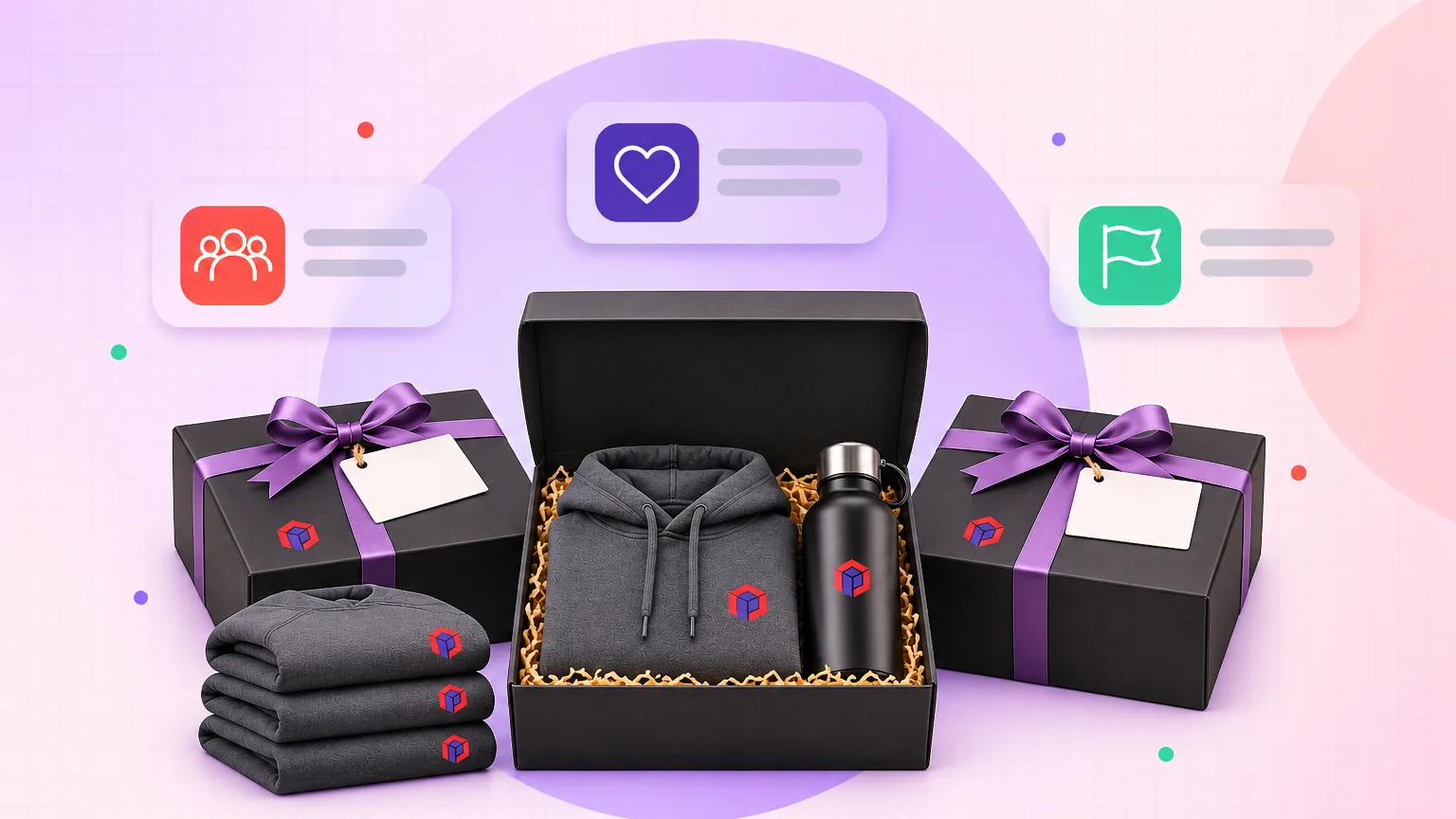
Picture a first day. You are a little nervous, looking at faces you do not know yet. Then someone hands you a box with your name on it. Inside there is a notebook, a bottle, a hoodie in your size and a note from your manager. Nothing in it is extravagant. But you now know that someone here was expecting you.
That is what a welcome kit does. It is a physical version of a sentence that is hard to say convincingly: we are glad you are here.
Why welcome kits matter more now
People no longer stay in jobs for pay alone. They stay where they feel they belong and are noticed. Onboarding is the first test of that, and most onboarding is forms, logins and policy documents. The welcome kit is the one part that is personal.
It also arrives at a sensitive moment. A new hire in their first week is still deciding how they feel about the move. Early signals carry more weight than anything the company does in month six.
Why a physical gift lands
A thoughtful, tangible gesture produces a response that an email does not. It is concrete, it took effort, and it stays on the desk. This is why many companies have replaced the orientation folder with a kit: the same information can sit behind a QR code, while the box does the emotional work. We explore this further in the psychology behind corporate gifting.
What makes a kit feel human
1. Personalisation
A name on one item, or a note signed by the founder or the team lead. It should be clear the box was prepared for this person and not pulled from a pile.
2. Useful and well made
Items that will be used daily: a steel bottle, a good notebook and pen, a mouse pad, a hoodie. Quality is noticed, and so is the lack of it.
3. Something that carries your culture
Choose at least one item that says something about who you are. A sustainability-minded company might include bamboo or jute. A design-led company might invest in the packaging. A playful team might add stickers.
4. A note worth reading
Two or three sincere sentences. What the team is looking forward to, who to ask for help, what the first week holds.
From transactional to memorable onboarding
Transactional onboarding gives a person what they need to start working. Memorable onboarding also makes them glad they came. The difference is rarely cost. It is timing (the kit arrives before or on day one), accuracy (the right size, the right name) and tone.
Running kits as a programme
- Standardise the core. Agree one kit, or two or three tiers, and reorder it rather than reinventing it for every hire.
- Collect details at offer acceptance. Size, address and phone number.
- Decide the delivery route. Desk drop for office hires, home delivery for remote ones.
- Keep stock ready if you hire often. See onboarding kits for monthly hiring batches.
- Ask for feedback. New hires will tell you which items they actually use.
Kit ideas by team
- Tech and product teams: hoodie, bottle, wireless charger, laptop stickers.
- Sales and client-facing teams: quality notebook, pen, laptop backpack, card holder.
- Campus hires: T-shirt, bottle, notebook, tote bag. See campus hiring welcome kits.
- Leadership hires: a smaller number of premium items and a personal note from the founder.
Where to start
The employee onboarding kits page explains how kits are built, branded and delivered. Compare ready welcome and onboarding packs, or assemble your own in Build-a-Box. For costs, see the welcome kit cost guide.