Building Your Brand Beyond the Screen: The Enduring Power of Print
Most brands live on screens. The ones people remember also show up as things they can hold. Where physical branding still does work that digital cannot, and why print quality decides whether it helps or hurts.
- Published:
- 2 April 2025
Almost every brand competes on the same few screens. A physical object with your name on it competes with far less. It sits on a desk, gets carried in a bag, gets used. That is why brands that invest in what people can hold tend to be remembered longer than brands that exist only as pixels.
Here is where physical branding still earns its place.
Things people keep
A web page is closed in seconds. A well-made notebook, a card or a printed catalogue stays around. People return to physical things without being retargeted, and each return is another moment with your brand. For B2B companies this matters most with clients: a quality item on a buyer's desk outlasts any email sequence.
Stationery and cards: consistency in the small things
Thank-you cards, greeting cards, notepads and notebooks reinforce your identity in ordinary exchanges. Nobody praises a consistent letterhead, but people notice when the details match. A short printed note inside a gift box often does more than the gift.
Packaging: the first physical contact
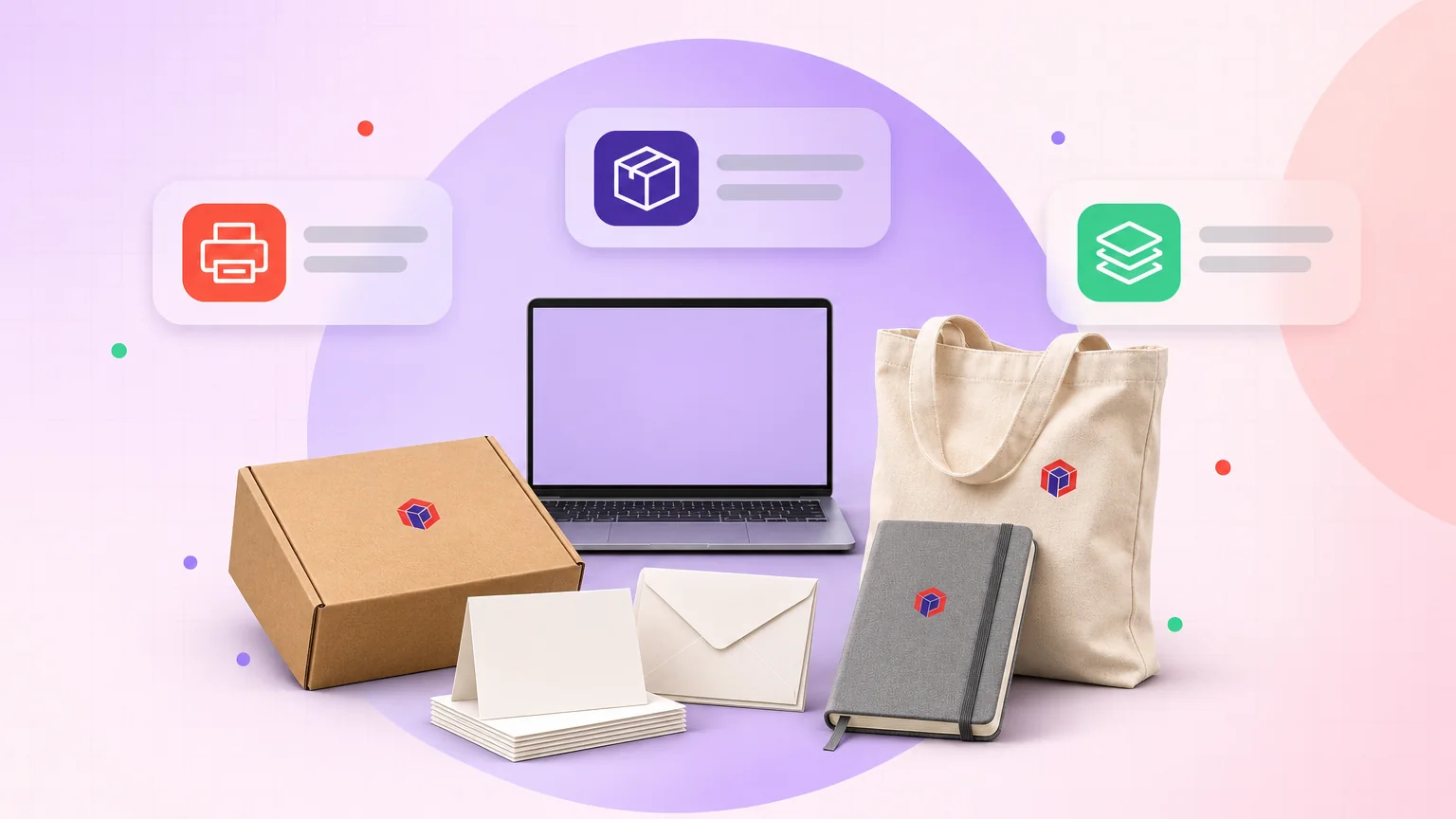
Packaging is the first thing a recipient touches, before they see the product. A sturdy, well-branded box raises the perceived value of everything inside it and turns opening the parcel into a moment. A flimsy or anonymous box does the reverse. If you are choosing between spending slightly more on contents or on the box, the box is often the better investment. Our guide to corporate gift packaging options compares the formats.
Merchandise: branding that gets used
Bottles, pens, tote bags, T-shirts and tech accessories carry a logo into daily life. The rule is simple: useful items get seen, and items that get seen build recognition. Branded apparel has a second effect inside the company, where it gives a team something shared.
The non-negotiable: quality
All of this works only if the execution is good. A faded logo, a misaligned print or a product that breaks in a month damages the brand it was meant to promote. Physical items are judged by touch as well as sight, and people read the quality of the object as the quality of the company.
Three things protect quality:
- Good base products. Branding cannot rescue a poor item.
- The right method for the material. Laser engraving for metal, UV or DTF printing where full colour is needed, sublimation for suitable surfaces. The printing types page explains each.
- A mockup approved before production. The free Mockup Studio shows your logo on the actual product first.
Digital and physical together
This is not an argument against digital. The strongest approach uses both: digital for reach, physical for depth. A QR code on a card can open a welcome video; a campaign can end with something that arrives at the door. The physical piece is what makes the digital one memorable.
Where to start
Browse packaging and office and stationery items, or see finished work in the portfolio. If your artwork needs checking first, read logo artwork and mockup approval.