Eco-Friendly Gifting Trends for the Modern Workplace: A Sustainable Shift with Impact
Sustainable gifting has moved from a nice idea to an expectation. The materials and items leading the shift, what makes a gift genuinely lower-impact, and a sample eco-friendly kit.
- Published:
- 16 May 2025
Corporate gifts say something about the company that sends them. A box of plastic items that will be thrown away within a month says one thing. A set of durable, reusable items says another. More companies now choose the second, and employees and clients have started to expect it.
This is a look at what is driving the shift and which items are leading it.
Why sustainable gifting matters
- Less waste. A gift that is used for years replaces many that are not.
- Reputation. Clients and candidates notice whether a company's choices match its stated values.
- Engagement. People appreciate useful, well-made items more than disposable ones.
- ESG goals. Many companies now report on environmental commitments, and gifting is a visible place to act on them.
The trends
1. Bamboo and wood
Bamboo grows quickly and has a warm, natural look that suits corporate gifting. Bamboo and wooden versions of everyday items are now common: notebooks and diaries with wooden covers, pens, desk organisers, and wooden or bamboo casings for tech items such as pen drives and wireless chargers.
2. Recycled and responsibly sourced stationery
Notebooks made from recycled paper or with natural covers are practical and easy to brand. They suit welcome kits and event giveaways equally.
3. Reusable drinkware
The clearest swap of all. A steel bottle or an insulated mug replaces a steady stream of disposable cups and plastic bottles. It is also one of the most used items in any kit. See drinkware and custom water bottles with logo.
4. Fabric bags
Jute and cotton tote bags replace plastic carry bags and work as the outer packaging of a kit as well as a gift in their own right.
5. Less packaging, better packaging
Kraft and paper-based boxes, fewer plastic fillers, and boxes sturdy enough to be reused. Packaging is often the largest source of waste in a gift, so it is the easiest place to improve.
What makes a gift genuinely sustainable
Not everything labelled "eco" is. A few honest tests:
- Will it be used for a long time? Durability is the most important factor. A steel bottle used for five years outperforms a "green" item that breaks in two months.
- Does it replace something disposable? Bottles, mugs and bags do.
- Is the material what it claims to be? Ask what the item is actually made of.
- Is the quantity right? Over-ordering creates waste whatever the material.
Our eco-friendly gift materials guide explains the common materials and what each claim means.
A sample eco-friendly kit
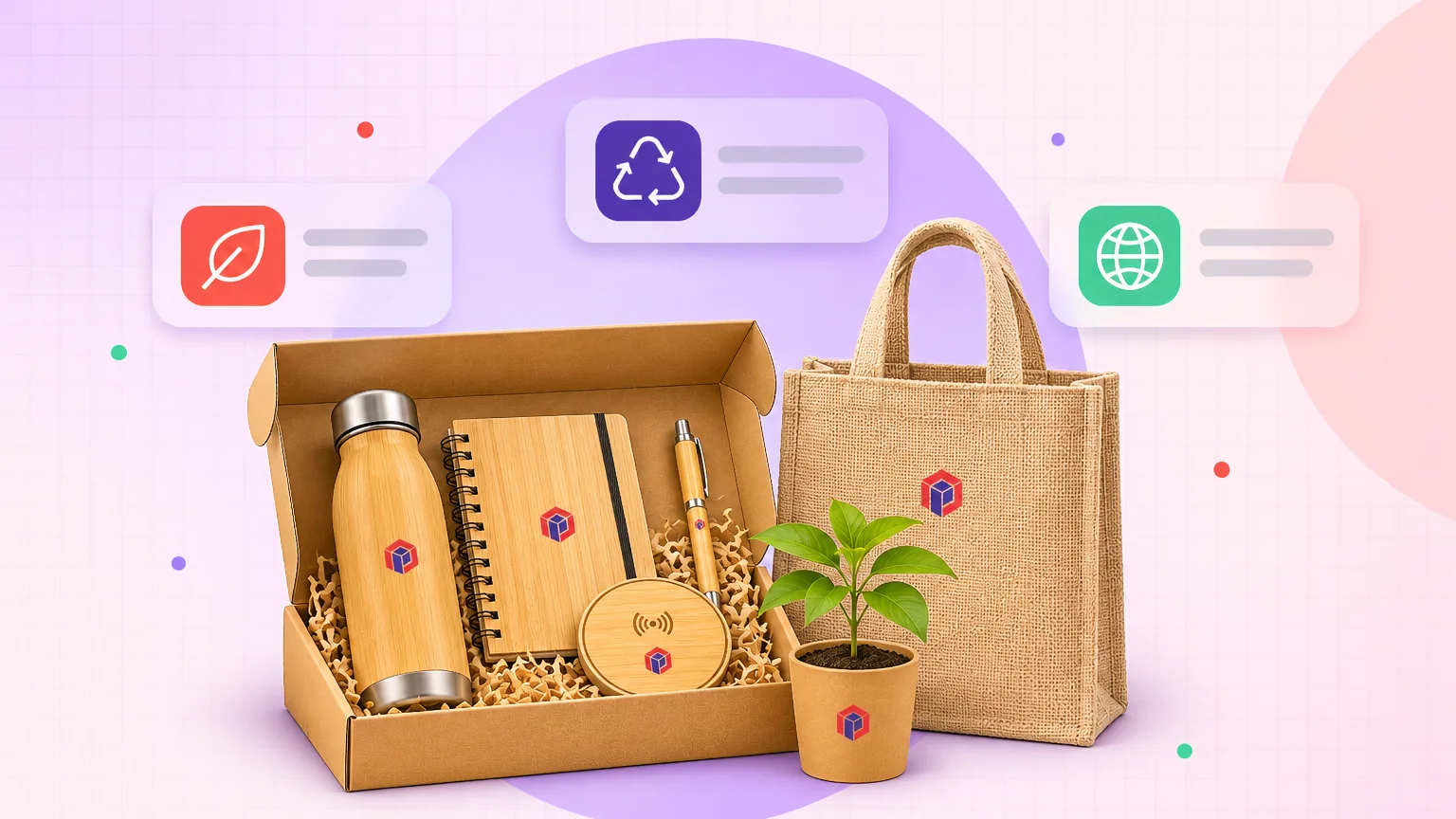
A welcome or festive kit built on these principles might include:
- a notebook with a wooden or recycled cover and your logo,
- a pen,
- a steel or bamboo-finish bottle,
- a wooden pen drive or a bamboo wireless charger,
- a jute or cotton tote bag,
- a card with a short note,
packed in a paper-based box with minimal filler. Laser engraving suits wood, bamboo and steel particularly well and uses no ink.
Where to start
The eco-friendly corporate gifts page lists what is currently available, with prices and minimums on each product. For event ideas, see top eco-friendly swag ideas for conferences, and for festivals, eco-friendly Diwali gifts for employees.