Corporate Gifts for Clients in India: Occasions, Budgets and What Actually Lands
Client gifts build standing, not belonging — different audience, different rules. The occasions worth marking, the budget bands that read right, dual-branding, and the gift-policy layer B2B teams forget.
- Published:
- 27 August 2026
Employee gifting and client gifting look like the same job — buy nice things, add a logo, ship them — and treating them as the same job is the most common way client gifts fall flat. An employee gift builds belonging; a client gift builds standing. Different audience, different rules, different budget math.
This guide covers what actually works for client gifting in India: the occasions worth marking, the budget bands that read as generous without reading as inappropriate, the dual-branding move most vendors never mention, and the compliance layer B2B teams forget until a gift gets returned.
Client gifts are not employee gifts
Three differences change everything:
1. The recipient did not choose you. An employee tolerates a mediocre mug; a client reads it as how much the relationship is worth. Quality floor is higher, quantity is lower — client lists are usually 20–200 recipients, not 2,000.
2. Someone else's policy applies. Many companies cap the gift value an employee may accept (common thresholds run ₹2,000–₹5,000, and some firms bar gifts entirely). An extravagant hamper can embarrass the very person you meant to honour. When in doubt, ask their procurement or send something consumable — food is the most policy-friendly category there is.
3. The gift represents both brands. Which is why dual-branding exists — see below.
The occasions that actually matter
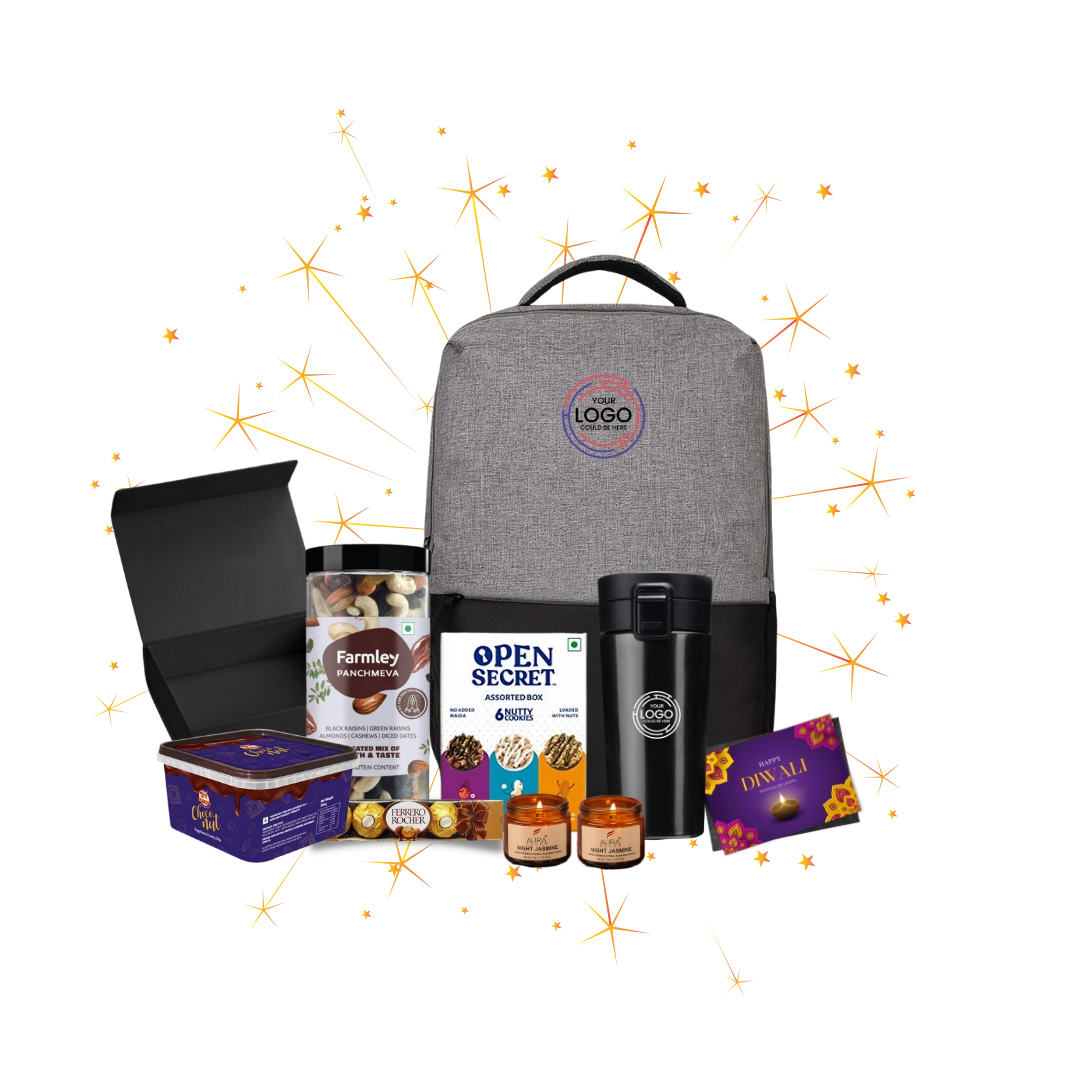
- Diwali — the anchor of the Indian corporate calendar. Client hampers skew gourmet: dry fruits, chocolates, festive treats in rigid boxes. Book 4–6 weeks ahead; slots genuinely fill. (Full programme options on our Corporate Diwali Gifts hub.)
- Deal closure / go-live — a small, well-made marker of the moment. Engraved desk items and premium drinkware outperform anything loud.
- Relationship milestones — one year of partnership, renewal, a big joint win. These are the gifts nobody expects, which is exactly why they land hardest.
- New leadership on the client side — a welcome gift to a new stakeholder resets the relationship's tone in one gesture.
What to send: the categories that work
Gourmet and consumables — the safest and most shared category. A hamper gets opened in front of colleagues; a gourmet selection circulates through the client's whole team, which multiplies the impression. Consumables also sit lowest on gift-policy risk.
Premium gift sets — a coordinated box (bottle, notebook, pen, tech accessory) reads as far more considered than one big item at the same price. Browse corporate gift sets for the structure.
Engraved keep-forever items — laser-engraved steel, embossed leather. Fewer items, better materials.
What to avoid: bulk promotional stock (that's an expo giveaway, not a client gift), anything requiring the client's size (guessing wrong is worse than not sending), and alcohol unless you know the recipient and their company policy personally.
Dual-branding: the move most vendors never mention
For client gifts, printing ONLY your logo turns a gift into an ad. The stronger form is dual-branding — your logo and the client's logo together ("Acme × Printing Labs"), or the client's logo alone with your note doing the attribution. It reframes the object from "we advertise at you" to "we invested in this relationship." We produce dual-branded client sets regularly; it costs one extra artwork approval and changes how the gift is received entirely.
Budget math for client lists
Client budgets run higher per head than employee budgets, on smaller lists:
- ₹500–₹1,000 — courtesy tier: festive greetings to a broad client list. Under ₹1,000 picks.
- ₹1,000–₹2,000 — the standard client band: proper hampers and multi-item sets. Under ₹2,000 picks.
- ₹2,000+ — key-account tier: for the ten relationships that carry your year. At this level, per-recipient personalisation (a name, not just a logo) matters more than another ₹500 of contents.
Two mechanics to remember from our bulk pricing guide: kits are taxed as mixed supply at the highest component rate (details in the GST guide), and per-recipient home delivery — the norm for client lists — carries its own per-address shipping floor. Budget the landed cost, not the catalogue cost.
Logistics: the part the client actually experiences
A client gift travels alone: one box, one address, one impression, no desk-drop to hide in. That means individually addressed dispatch with per-recipient tracking, a hand-checked address list (ask each account manager to confirm theirs — CRM addresses go stale), and packaging built for courier transit. For metro-heavy client lists, see how delivery runs in Mumbai — the client-gifting capital of the country — and our other city pages.
Frequently asked questions
What is an appropriate client gift budget in India?
₹1,000–₹2,000 per recipient is the standard band for meaningful client gifts; ₹500–₹1,000 works for broad festive lists; key accounts justify more, subject to the client's own gift-acceptance policy — which is the real ceiling, not your budget.
Should client gifts carry our logo?
Lightly, or jointly. Dual-branding (your logo + theirs) or the client's logo with a personal note reads as investment in the relationship; a large solo logo reads as advertising.
When should we order Diwali client hampers?
Finalise 4–6 weeks before Diwali for full product choice and dependable delivery slots. Late orders compress into whatever express-eligible items remain.
Can one order serve both employees and clients?
Yes — one programme can carry two tiers (employee kit + client hamper) with separate packaging and separate delivery lists. It's the most budget-efficient way to run a festive season.
The client-gifting calendar
Client gifting works best as a programme with a calendar, not a scramble in the week before Diwali. The moments worth planning around:
- April — the new financial year. Renewals land, budgets reset, and a small well-made marker to the accounts that carried last year sets the tone for this one. This is also when the year's gifting budget should be set — once, for all four quarters.
- Diwali (October–November). The anchor event, and the one with a hard operational deadline: finalise 4–6 weeks ahead, because product choice and delivery slots genuinely narrow in the final weeks.
- Deal closures and go-lives — year-round. These cannot be scheduled, but they can be prepared for: a pre-approved artwork and a shortlisted engraved item mean a closure gift ships in days, while the win is still fresh.
- December year-end. For client lists with international stakeholders on a calendar-year rhythm, a smaller December beat covers what Diwali does not.
Spread this way, the same annual budget lands three or four well-timed impressions instead of one crowded festive delivery.
Run it as a programme, not a one-off
The teams that get the most from client gifting treat it as infrastructure:
- Tier the list once. Key accounts, active relationships, broad list — each tier gets a budget band and a default gift shape, so each occasion is a selection, not a project.
- Pre-approve the artwork. Dual-branding needs one artwork approval per client pairing; doing it once at programme start removes the slowest step from every later order.
- Keep a send log. Who received what, and when — nothing undercuts a thoughtful gift like repeating last year's.
- Reuse the kit as a template. A repeat order against an approved kit is days, not weeks; the first order is the only one that should feel like procurement.
Related reading
Part of The Corporate Gifting Guide — the full procurement path.
- How to Choose a Corporate Gifting Vendor in India: the 12-question checklist.
- Bulk Corporate Gift Pricing in India: the four cost layers behind every quote.
- Corporate Diwali Gift Ideas: the festive idea bank.