Bulk T-Shirt & Apparel Printing for Corporate Teams: Pricing, MOQs and Turnaround
GSM, screen print vs embroidery, MOQs from 5 units, the 5%-GST price line, and the sizing playbook — how bulk corporate apparel actually gets ordered well.
- Published:
- 27 August 2026
Bulk apparel is where corporate merchandise gets real: nothing else puts your logo on a hundred chests at once, and nothing else punishes a bad vendor decision as visibly. A cheap tee that fades after two washes is a walking anti-advertisement — worn once, remembered wrong.
This guide covers how bulk t-shirt and apparel printing actually works for corporate teams in India: which branding method suits which garment, how the pricing mechanics add up, the GST quirk unique to apparel, and the sizing logistics that make or break a team order.
The garments, and what each is for
- Round-neck cotton tees (160–180 GSM) — the volume workhorse: events, campus drives, large team days. GSM is the fabric-weight number worth asking about; 180 GSM is a dependable corporate weight — substantial without being heavy.
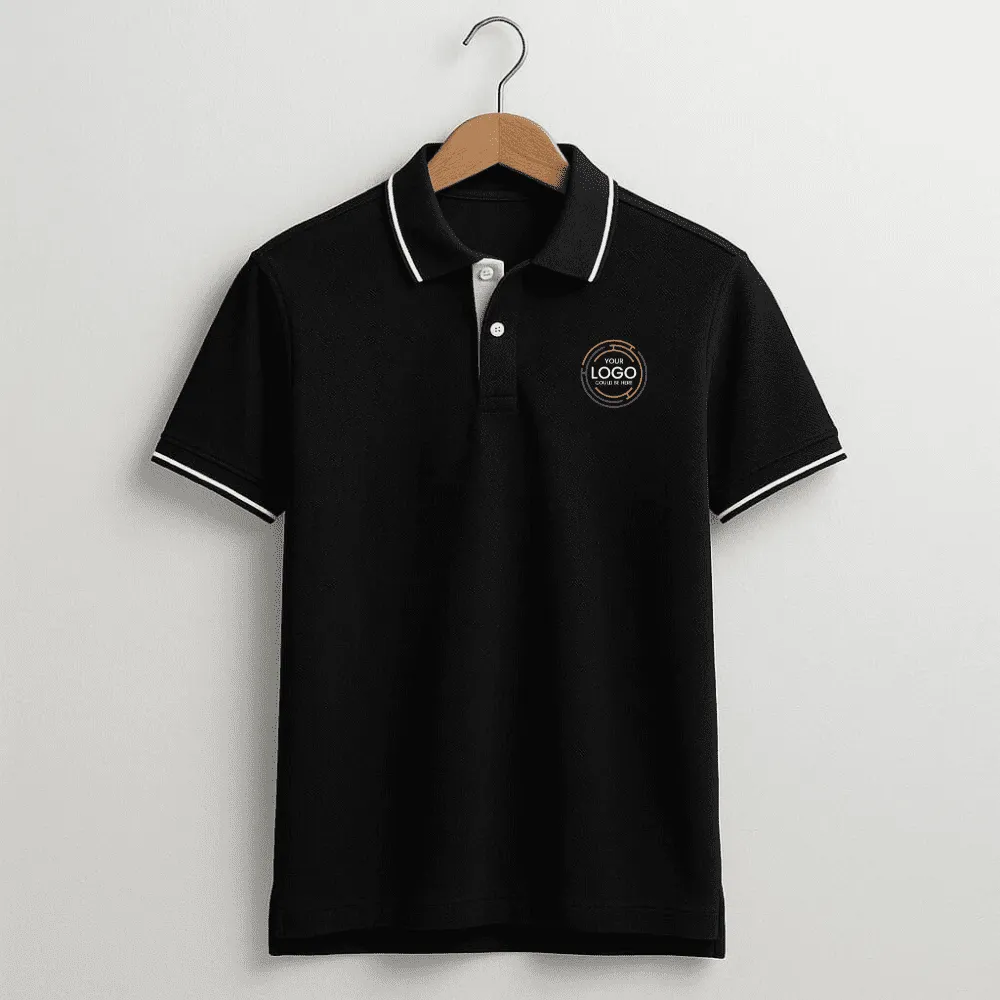
- Polo t-shirts — the "uniform that doesn't feel like one": customer-facing teams, offsites, Friday wear. The collar carries embroidery beautifully.
- Sweatshirts and hoodies — the premium tier and the single most-kept apparel item in any welcome kit. Winter offsites, milestone gifts, leadership batches.
- Caps — the cheapest per-impression apparel there is; embroidery only.
Browse the live range with per-product MOQs and pricing on our Apparels category.
Branding: the method decides how it ages
Apparel is where the branding-method choice matters most, because fabric moves, stretches and gets washed:
- Screen printing — the volume choice for flat chest/back prints; priced per colour via setup screens, so it gets dramatically cheaper as quantity rises. Best at 50+ units with 1–2 colour artwork.
- Embroidery — thread, not ink: the premium signal on polos, hoodies and caps. Priced partly by stitch count, and it outlasts the garment itself. Left-chest logos ~7–10cm wide are the standard.
- DTF (direct-to-film) — full-colour capable with no per-colour setup, which makes it the pick for gradient logos and smaller runs.
Which method suits which material — and what embossing, engraving and sublimation do on non-fabric items — is covered in our branding methods glossary. Preview your own logo on any garment in the Mockup Studio before ordering anything.
Pricing mechanics for an apparel order
Apparel follows the same four cost layers as every bulk order — unit price, branding, kitting, shipping (full breakdown in the bulk pricing guide) — with three apparel-specific notes:
1. Setup amortisation is steeper. Screen-print setup is per colour; a 2-colour logo across 200 tees costs pennies per piece, across 20 tees it dominates the unit price. This is why apparel quotes swing more with quantity than any other category. On our catalogue garments, standard logo branding is already in the listed price at every quantity from the MOQ; volume lowers the price through the bulk tiers.
2. Size mix is free, size chaos is not. A standard S–XXL spread inside one design and one print is one production run. Per-person names/numbers, or a scatter of one-off sizes, is personalisation — priced per piece.
3. The GST quirk: apparel is the one gifting category with a price-conditional rate — 5% GST when the sale value is ≤ ₹2,500 per piece, higher above it. Nearly all corporate tees, polos and sweatshirts sit comfortably under that line, which makes apparel one of the most tax-efficient gifting categories. (The full classification picture is in our GST guide.)
MOQs and turnaround
Customised apparel starts at low MOQs (from 5 units on most catalogue garments) with real price breaks at 50+ and 100+. Standard production runs 7–10 business days after proof approval — and for apparel, the proof step includes print position and size, not just artwork. Express programmes are possible on selected garments; the constraint is usually blank-stock availability in your size mix, so share the size spread on day one.
The sizing playbook (where team orders go wrong)
- Collect sizes at the source — a form field at onboarding or before the offsite, never a guess from HR. Sizes are the 1 cause of apparel reorders.
- Order a buffer: +5–10% skewed to M/L/XL covers no-shows, replacements and the colleague who joined last week.
- Anchor on unisex sizing unless you're collecting gender-specific fits deliberately — mixed sizing systems double the error rate.
- Pair it into a kit: a tee or hoodie is the wearable anchor of most welcome swag packs — apparel plus notebook plus bottle beats apparel alone at the same landed cost per impression.
Frequently asked questions
What is the minimum order for custom t-shirt printing?
Most catalogue garments customise from 5 units, with meaningful per-unit price breaks at 50+ and 100+ — the setup cost amortises across the run.
Screen print or embroidery for a company logo?
Screen print for tees and large flat artwork at volume; embroidery for polos, hoodies and caps where a premium, durable finish matters. Multi-colour or gradient logos on smaller runs point to DTF.
How long does a bulk apparel order take?
7–10 business days after proof approval as standard. Express is possible on selected garments — blank-stock availability in your exact size mix is the usual limiter, so lock sizes early.
What GST applies to corporate t-shirts?
5% when the sale value is ≤ ₹2,500 per piece — which covers nearly all corporate apparel. Above that line the rate is higher; confirm treatment with your CA.
Print placement: where the logo goes
Placement changes how the same logo reads:
- Left chest (7–10 cm wide) — the corporate standard: visible, professional, and right for daily wear. Embroidery and screen print both work here.
- Full front (up to ~25–30 cm) — the event statement: hackathons, campus drives, launch days. Screen print or DTF territory.
- Full back — crew visibility: volunteers, event staff, anyone who needs identifying from behind.
- Sleeve — the accent position, usually paired with a left-chest primary; a second placement is a second print run, priced accordingly.
Preview any placement on the actual garment in the Mockup Studio before approving the proof — it shows the print area for each product, so the artwork is sized to the garment rather than guessed.
Choosing the garment by use case
- Daily customer-facing wear → polo. The collar reads uniform-without-feeling-like-one, and it carries embroidery well.
- High-volume events → round-neck cotton tee. The per-unit economics work at hundreds of units, and 160–180 GSM holds up without feeling heavy.
- Winter offsites and premium tiers → hoodie or sweatshirt — the single most-kept apparel item in any welcome kit.
- Add-on visibility → cap. Cheapest per-impression apparel there is; embroidery only.
The reorder playbook
The first order teaches you things the second order should use:
- Keep the size curve. Batch one's actual S–XXL split is a better forecast than any HR guess; reorder against it.
- Hold the buffer discipline — +5–10% skewed to M/L/XL covers replacements and new joiners between batches.
- Move rolling needs to a brand store. When apparel is part of onboarding, a private store lets each new joiner pick their own size — and every batch after the first becomes a reorder, not a project.
Related reading
Part of The Corporate Gifting Guide — the full procurement path.
- Bulk Corporate Gift Pricing in India: the four cost layers, in depth.
- GST on Corporate Gifts: where every gifting category lands after GST 2.0.
- How to Choose a Corporate Gifting Vendor: the 12 questions before you order.